Thesis Opportunities
Explore thesis directions in computational mechanics, experimental testing, fatigue and structural integrity at the University of Pisa and with potential research contacts abroad.
Interested in understanding why materials and structures fail and how to improve predictions? Bachelor’s and master’s students in mechanical engineering and related disciplines can discuss a thesis combining mechanics, simulations, programming or laboratory work.
Three computational and experimental thesis projects are proposed alongside broader research directions. The thesis objectives will be agreed according to your background, interests and available research activities.
02 / Student projects
Available thesis projects
01 / Computational research · Python
Open-source multiaxial fatigue methods
Contribute to the public FABER WG4.3 multiaxial-fatigue repository. Study fatigue assessment criteria from the scientific literature, implement the selected methods in Python and compare their results on documented loading cases.
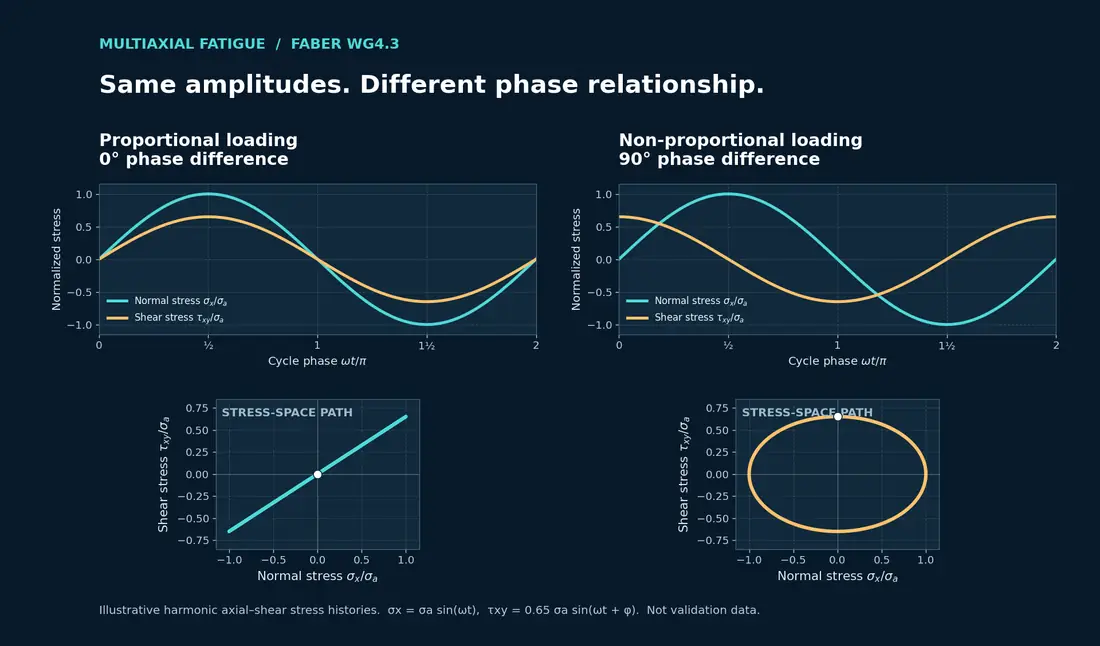
Project activities Literature review; formulation and implementation of fatigue methods; unit tests and numerical examples; documented code contributions; comparison with available experimental data.
Related publications
02 / Experimental research · Vibration testing
Experimental fatigue of capacitors on electronic boards
Investigate the fatigue resistance of capacitors mounted on printed circuit board assemblies (PCBAs). Design and prepare a capacitor test circuit, perform vibration tests using laboratory shakers and interpret the observed response and failure mechanisms.
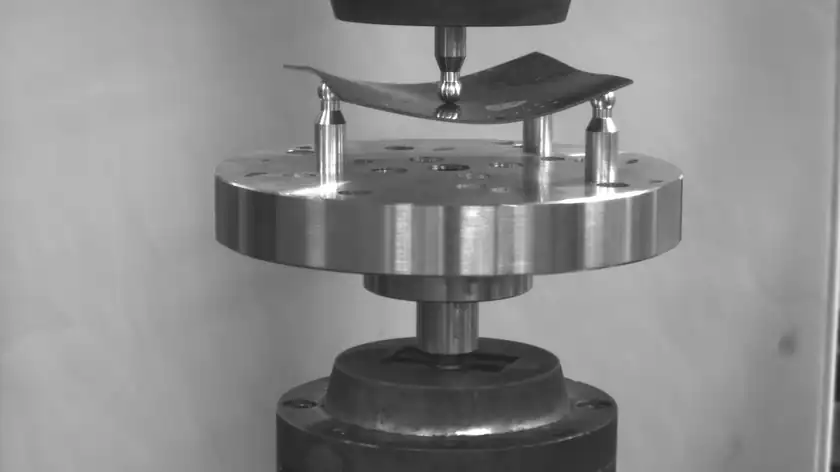
Project activities Circuit and specimen design; shaker-test planning and instrumentation; experimental measurements; analysis of capacitor fatigue and comparison with available prediction methods for electronic components.
Related publications
03 / Experimental and computational research · Thermal imaging
Fatigue of lattice structures and effects of surface coating
Investigate the fatigue resistance of additively manufactured lattice structures and the effect of surface coating. The project combines experimental tests on coated and uncoated specimens with infrared thermography and the assessment of fatigue behaviour using available methods.
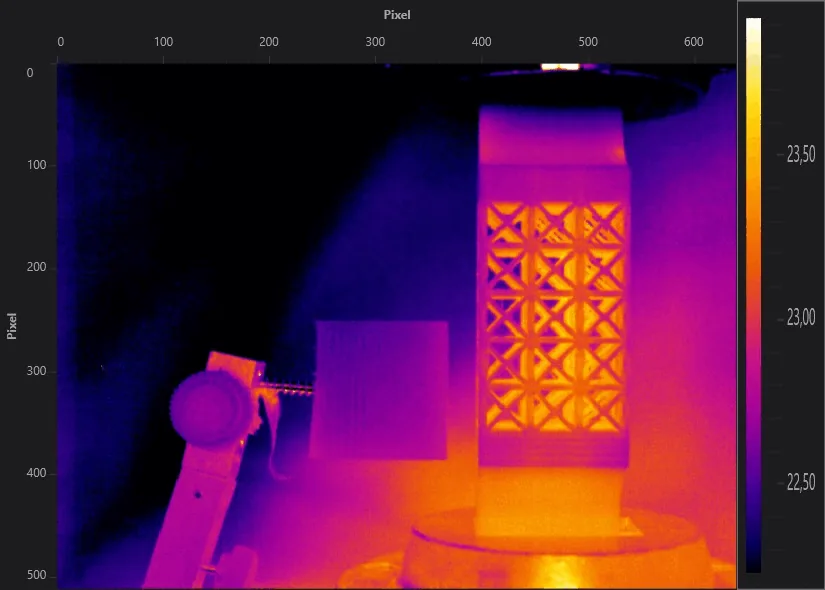
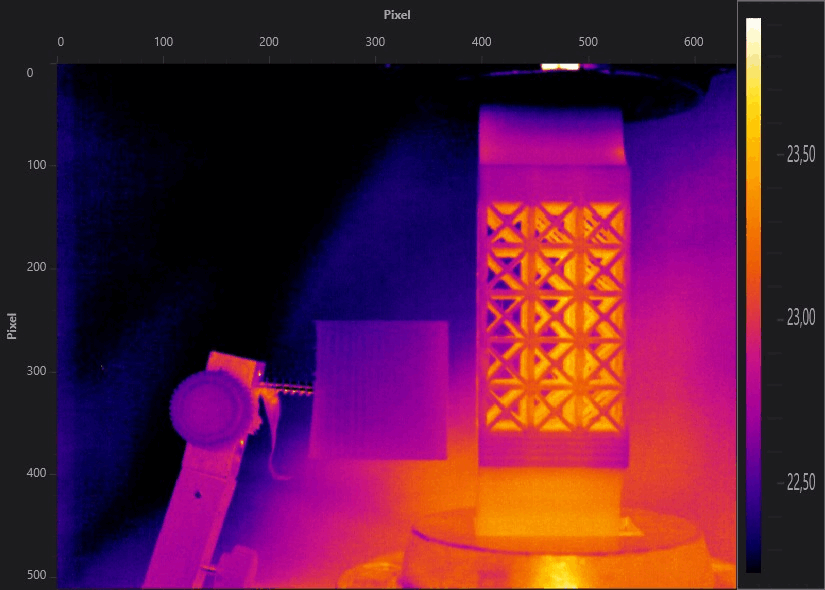
Project activities Design or selection of lattice specimens; coating and specimen preparation; static and cyclic tests; infrared thermal measurements; comparison of fatigue results and failure mechanisms.
Related publications
03 / Research topics
Explore a research direction
Numerical + experimental
Welded structures
Explore how welding affects the stresses and fatigue life of a component. A thesis can connect process simulations with measurements and tests on welded joints.
Typical activities Welding simulation; thermomechanical finite element models; residual stress evaluation; fatigue testing and numerical–experimental comparison.
Numerical / computational
Multiaxial fatigue of metals
Study how metals accumulate fatigue damage when loads act in several directions. Develop and compare assessment methods, with opportunities for students interested in mechanics, programming and scientific computing.
Typical activities Critical-plane criteria; efficient algorithms; model benchmarking; validation against experimental datasets; Python-based scientific software.
Experimental + numerical
Fatigue behaviour of polymers
Investigate how polymeric materials behave under repeated loading and how to predict the life of polymer components. The balance between testing and modelling can follow your interests and the agreed project.
Typical activities Mechanical and cyclic characterisation; constitutive and fatigue-life models; component simulations; experimental validation. Temperature effects may be considered where feasible.
Numerical + experimental
PCB fatigue and reliability
Explore the mechanical reliability of printed circuit boards and electronic assemblies. Potential applications include components exposed to cyclic or vibration loading in automotive and other engineering environments.
Typical activities Finite element models of boards and components; mechanical response and failure mechanisms; fatigue-life estimation; comparison with measurements.
Numerical / computational · exploratory
AI for structural integrity
Explore whether data-driven methods can support fatigue prediction and structural assessment. Specific AI projects depend on suitable datasets, research collaborators and agreed thesis objectives; these are potential directions, not claims of established or validated tools.
Typical activities Machine-learning benchmarks; physics-based and data-driven models; surrogate modelling; interpretation of experimental data against reference results.
Choose how you work
You can focus on computation, experiments, or their combination. The activity labels above are starting points; we will agree a feasible approach for your thesis.
Numerical / computational
Finite element simulations, analytical methods, programming and algorithm development. Compare models and check their predictions against reference data.
Experimental
Laboratory testing, specimen characterisation, measurements and data acquisition. Interpret results to understand material and component behaviour.
Combined
Build a numerical model and support it with experiments. Correlate simulations with measurements and validate structural or fatigue assessment methods.
Thesis activities in Italy and abroad
Projects may be developed within the Department of Civil and Industrial Engineering, University of Pisa, with local industrial companies, or by exploring collaboration with international research institutions.
Previous research exchanges provide contacts for discussing fatigue, structural integrity, computational and experimental mechanics, and potentially AI-supported modelling. Research environments to explore include:
- Aarhus UniversityDenmark
- Fraunhofer LBFDarmstadt, Germany · Institute for Structural Durability and System Reliability
- Czech Technical University in PragueCzech Republic
- NTNUNorway · Norwegian University of Science and Technology
These contacts do not imply permanently open or guaranteed placements. Any international thesis depends on project availability, agreement of potential supervisors, host-institution acceptance, academic requirements, and funding and mobility arrangements where relevant.
Interested in one of these topics?
Contact me directly by email with your degree programme, interests, relevant experience and expected timeframe. If one of the specific projects interests you, please mention its title.
andrea.chiocca@unipi.it